
Nuria’s journey across cultures and generations

In today’s Global Focus column, Nuria Gonsalves, National Lead of The Salvation Army’s Culturally and Linguistically Diverse (CALD) Engagement team, reflects on the lessons that shaped her life. Many of those lessons were first learned as a child growing up in India, watching her parents respond to very real challenges with courage and faith.
BY NAOMI SINGLEHURST
As the oldest of three children, Nuria grew up in a safe, quiet Catholic village outside Mumbai, and her childhood was, in many ways, idyllic.
“I was born in this beautiful town called Vasai,” she says. “We had 26 parishes, and I grew up in a parish called Gokhivare. I can still picture waking up to the sound of church bells echoing through the streets of our village. The air was always filled with a sense of tranquillity.”
The village was small – about 200 families.
“This town was just a tight-knit community where I grew up. Everyone knew each other. Our lives intertwined with the church calendar – Sundays with the Mass, choir practice, youth groups and St Vincent de Paul meetings. Family was not just biological – the congregation was like a larger family bound by faith.”
Faith challenged
One night, when Nuria was only eight years old, that sense of safety was shaken.
“At around 1.30am, the doors to our home just burst open,” she recalls.
Her father, working for Air India, had recently returned from Singapore. The electricity had been cut. It was monsoon season.
“Mum and Dad immediately woke up, and they knew something was not right. Mum closed the bedroom door and picked us up from sleep, put us under the bed.”
As the oldest child, Nuria was given instructions. “Hold them. Don’t make any noise. Cover their mouths.”
Nuria pressed her hands over the mouths of her younger siblings as a gang of robbers entered the house and began beating her father with wooden sticks in the same room. Her aunt was attacked elsewhere in the house.
“We had three doors to our house, so Mum ran to the back door. It was very terrifying. If I think of it, I get pins and needles all over – even now,” Nuria says. “But mum was very strong, and she had a strong faith.”
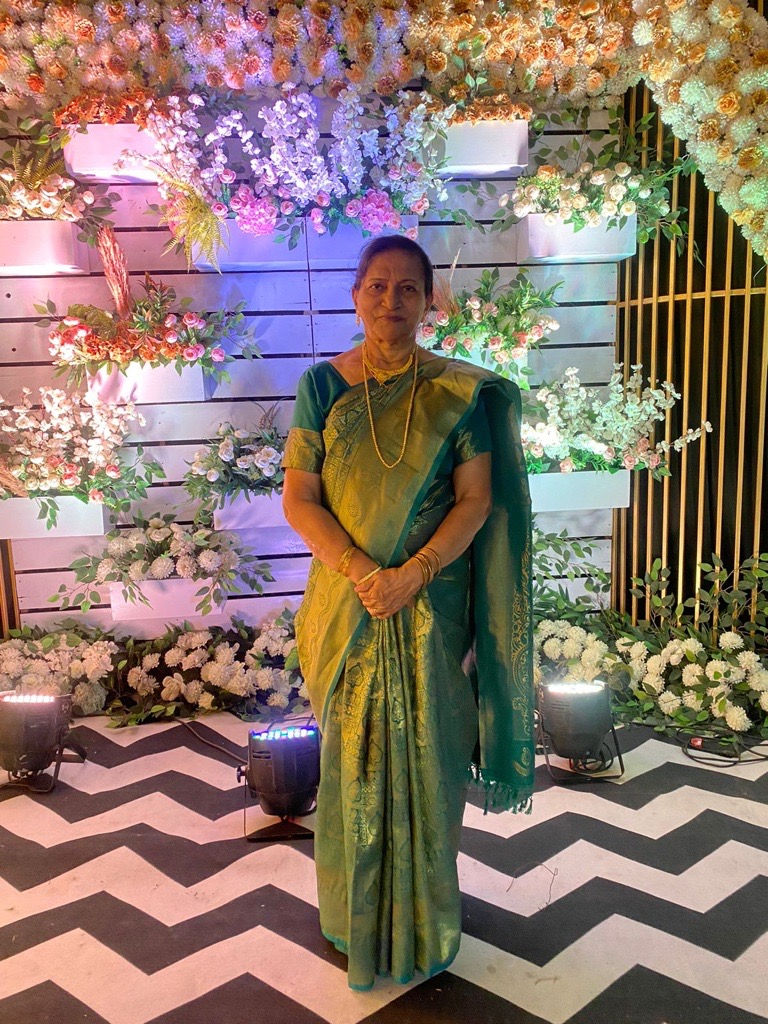
Supernatural help “At that moment, Mum was just saying constantly, ‘Christ help me, guide me.’ In the midst of the chaos, she went to the back door and said something incredible happened to her. She jumped into the fields to go to the neighbours to seek help, and it felt like there was a divine presence.
“She rushed to the neighbours for help, and she was crying in the loudest voice ever. Some of the robbers saw her and followed her.”
A neighbour ran to the church and began ringing the bell in the middle of the night, waking the community. “The whole town came running,” Nuria says.
Her father needed more than 20 stitches. Her aunt was injured. Her grandfather, who had been locked in another room, died two days later from the shock.
“It was really the most terrifying experience for our family,” she says. “But it was also a turning point for our family. It deepened our connection to our faith in ways we hadn’t imagined, built resilience and showed the importance of forgiveness.”
Nuria says her mother and father showed “the power of unwavering faith in the face of adversity” and became a “pillar of strength”.
“No matter what challenges come our way, through our faith, we can overcome.”
Believing in God’s goodness
After completing her Bachelor of Education and teaching for a year, Nuria happily entered into an arranged marriage with Rodney, an engineer from Mumbai who had been offered work in Australia.
That lesson – and many others from her mother and father – stayed with her when she moved to Australia as a young bride in her 20s.
“Within a month of getting married, I was here,” she says. “It was total culture shock. I was no different to any other community member who comes to a new country. No family. No relatives. Everything new.”
Even the language felt unfamiliar.
“People would say ‘no worries’, and I would think, ‘I’m not worried’. Colleagues would crack jokes, and I would laugh but have no understanding.”
Though naturally outgoing, she felt lonely.
So, she did what she had always done and drew on her faith and courage.
“Every morning, I would walk to St Anthony’s Church near where we lived and attend Mass. Most of the time, there were women who were retired and attending church, and I made friends with them.
“I did make friends with different cultural groups – there was this lovely woman from Sri Lanka, some were Italian, and there was a Vietnamese woman. They were very loving. They used to come and talk to me. I just wanted to understand living in Australia.”

Motherhood joy “We were married in 2004, and our beautiful daughter Rionah came into our lives in 2007 and Rishona in 2011. It is beautiful – life-changing,” Nuria shares.
“My mum and my parents-in-law took turns to come to Australia and support us as the kids were growing up. That was really beautiful, and I do appreciate that a lot.
“When you are away from your family, that’s when you realise how important it is ... I’m just so grateful for all they have done.”
When asked what she hopes to pass on to her daughters, Nuria is clear.
“I want Rionah and Rishona to carry the courage and resilience my mother showed me, to trust God even in the most uncertain times. I also hope they cherish our Indian roots – the culture, the language, the festivals, the food, the sense of community – while embracing the opportunities of life here in Australia.
“These are gold nuggets that shape identity, faith and a sense of belonging.”
A career and a calling

Although trained as a teacher specialising in mathematics, Nuria eventually began working with The Salvation Army through Employment Plus, later stepping into her current national CALD leadership role.
She soon realised how much she loved and valued the work, which she says added a “profound sense of meaning” to her life.
“The work with The Salvation Army allowed me to touch lives in a more immediate and personal way. I was part of a team that was making a difference … addressing real-world challenges that many people face every day, providing assistance with employment, helping community members going through trauma, depression, addiction, language barriers, or trying to integrate into the Australian culture.
“It became a calling.”
In many ways, the work reflects the lessons she first learned at home – faith expressed in action, community expressed in care, and courage expressed in service.
Today, as National Lead for CALD Engagement, she works to support Salvation Army corps (churches) and teams across Australia to engage effectively and meaningfully with culturally and linguistically diverse communities.
But while her leadership spans the nation, the lessons that shaped her life are still most intentionally lived out at home.
To hear Nuria tell her story, visit https://my.salvos.org.au/rich-tapestry/episode-1-nuria-gonsalves/


