
On-site pharmacist a boost to wrap-around support at Project 614
BY LERISSE SMITH
On any given day at The Salvation Army’s Melbourne Project 614, visitors often arrive carrying more than just backpacks and other belongings – they’re navigating complex physical and mental health challenges, including the often-overlooked daily challenge of managing their medications.
But help is now at hand.
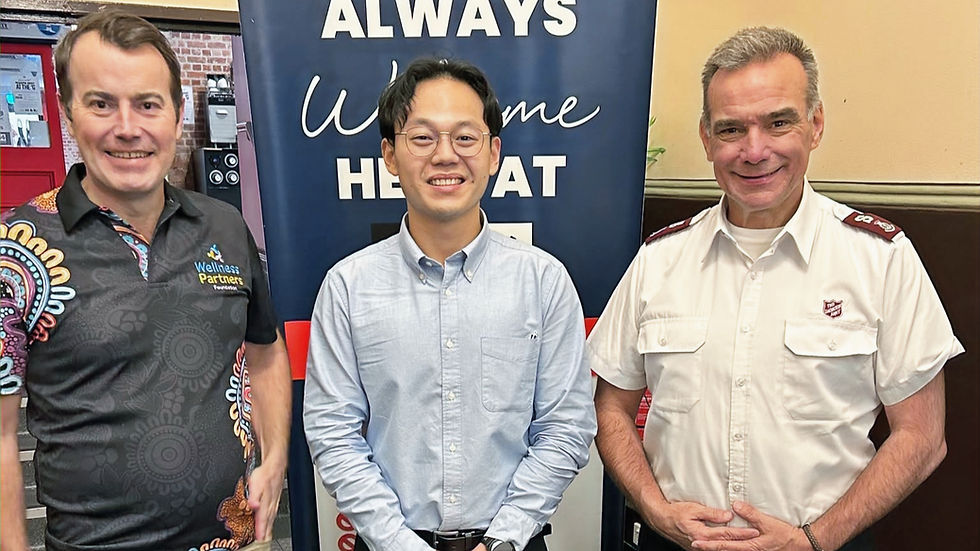
Eakly Bun is the first pharmacist to join the Project 614 team through a partnership with the Wellness Partners Foundation. Eakly will provide holistic, wrap-around support to vulnerable Melburnians two days a week.
“We are thrilled to welcome Eakly and really excited about the opportunity to have a pharmacist based on site,” says Major Brendan Nottle, Project 614 Team Leader.
“The pharmacist will be available to provide a whole range of health support to people. He will work very closely with the GPs, addiction specialists and mental health clinicians who are based here.
“It’s one of the missing pieces of the puzzle for us. So, to have the pharmacist here engaging with people in the café, doing medicine reviews for people and for those that receive prescription medication and feel unwell ... for them to be able to talk about that with someone who is an expert in that field is really important. We want the pharmacist to build relationships with people because that’s what we’re about.”
The relational focus lies at the heart of the model.
It is hoped that by building those relationships, people will feel comfortable speaking with the pharmacist about health concerns they might otherwise feel embarrassed to raise.
“Hopefully, they can get some resolution around those issues, and working with the team from the Wellness Partners Foundation is really exciting because they’re working hard towards developing a pharmacy embedded here in our Cafe 614 at Bourke Street,” he added.
“The partnership would not have happened without the passion of Michael Bonner, founder of the Wellness Partners Foundation.”
Michael Bonner, founder of Wellness Partners Foundation and a Clinical Pharmacist, says the exciting initiative at Project 614 reflects a simple belief: pharmacists can play a much bigger role in supporting vulnerable Australians.
He believes the greatest impact of the new pharmacist appointment is filling a major gap in medical care and medication management – an often-overlooked challenge, particularly as homelessness continues to rise.
“In the last couple of years, we’ve founded the Wellness Partners Foundation,” he says. “And part of our mission and our focus is supporting or addressing the disparities of health and wellness that vulnerable Australians experience.”
As the foundation evolved, homelessness became a clear priority.
“People experiencing homelessness have been a key focus where we can see pharmacists stepping out from behind the counter, providing a lot of support and assistance, particularly with pharmacists having that expertise,” reflects Michael. “Not just in medication and health expertise but also being very non-judgmental in how we approach things.”
That philosophy shapes the Project 614 model.
“It’s a safe space,” he explains. “Having a pharmacist embedded there is a natural progression from what we see our support is offering.”
Practical experience
As a registered pharmacist, Eakly brings additional qualifications as a credentialed clinical pharmacist, including training in medication management reviews and on-site pharmacy in aged care, preparing him for trauma-informed and culturally safe medication management in non-traditional healthcare settings.
He also brings practical experience working with Salvos clients in Dandenong, where he worked as a community pharmacist supporting at-risk communities.
The initial brief for his role at Project 614 is to build rapport and establish relationships with visitors who are often disconnected from health services and healthcare providers.
Eakly began his role a few weeks ago and says he’s really enjoying his work at Project 614.

“The part I enjoy most is the small chats with visitors. Listening to and understanding each person’s story and their own perspective on health is integral to supporting them holistically,” he says.
“I also love working within such a strong multidisciplinary team ... what makes it special is that everyone works together with genuine compassion and respect, all lending a hand to those in need.”
So, how did the partnership with the Salvos begin? It was a relationship that had been years in the making.
Michael’s pathway into Project 614 grew organically through relationships in the health and social services sectors.
His 20 years of aged care work eventually led to requests to extend his team’s expertise to other underserved communities, including those affected by addiction. He was soon introduced to Dr Paul McCartney and Dr Dean Membrey, who work with Project 614’s Co-Health team, and to Brendan, leading to broader discussions with the Salvos at several sites across Australia.
Michael has been a regular presence at Project 614 over the past year, helping to shape a sustainable model of care that complements existing services.
“The big thing for us is that some of the visitors to 614 often have had adverse experiences with the health system,” he says. “The last thing we want to do is plug in a service and then pull it away.”
Managing medication safely One of the main challenges for 614 visitors is access. Many do not have Medicare or concession cards, limiting their access to medication.
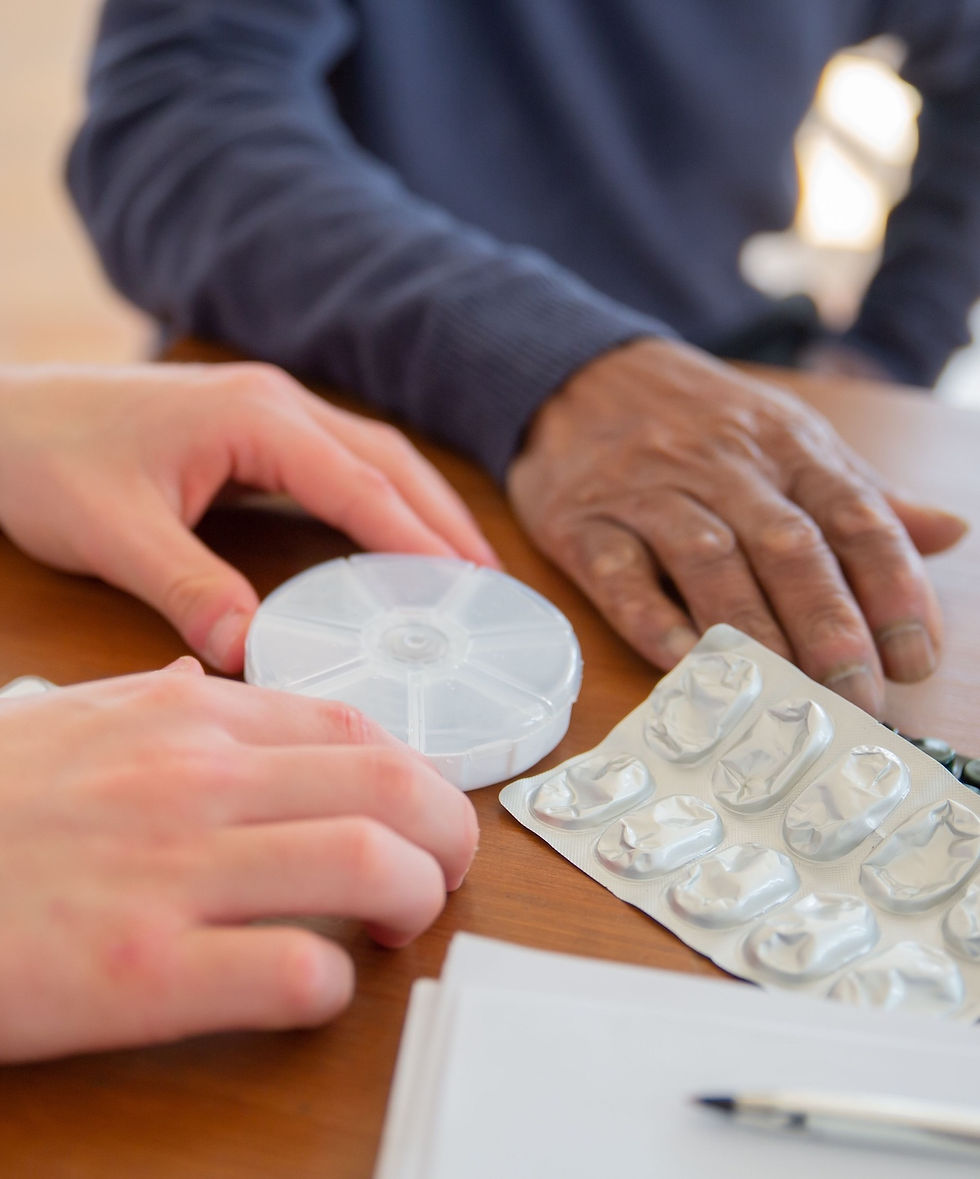
“The other barrier we’re seeing significantly, which we all take for granted, is that someone living on the streets or rough sleeping has a lot of trouble managing their medications,” says Michael. “They can get lost or stolen. Storage is very hard when you’ve got one or two months’ supply. It’s very difficult.”
From there, something as basic as medication compliance becomes complex, with safe storage, correct timing, and consistency becoming difficult in unstable environments.
These realities sit at the centre of Eakly’s future role – supporting people to manage their medication safely day-to-day. Mental health is another key area where pharmacists can provide early, non-judgmental conversations and help connect people with appropriate care.


