
Salvos Schools homelessness tour – a classroom like no other

A city walk-and-talk might not sound life-changing, but for thousands of students across Australia, the Salvos Schools Homelessness City Tour is proving transformative. By combining a Homelessness Workshop with a powerful city tour, the program immerses students in real places and real stories, opening their eyes to the diverse experiences of homelessness and creating powerful opportunities for corps to build strong connections with school communities.
As Australia marks Homelessness Week 2026 with the theme ‘Homelessness Action Now’, Salvos Online journalist LERISSE SMITH spoke with the Salvos Schools team about their impactful educational program and how it is equipping the next generation with the knowledge, empathy and confidence to champion meaningful social change.
It’s no ordinary school excursion.
A group of Year 9 students from Hawkesdale College in regional Victoria stand quietly in the heart of Melbourne’s CBD. Traffic rushes past. Around them, the city carries on as normal. Over the next hour, these familiar streets will become a classroom unlike any other.
What follows is a powerful experiential tour that explores sites of refuge and stories of lived experience related to one of the nation’s most pressing social issues: homelessness. It aims to foster compassion, build empathy, and empower students to take social justice action to address the growing crisis.
“I feel so inspired to know that this generation and these students in Victoria that have participated now have the language to respond to homelessness,” reflects Grace Davidson, National Schools Engagement Manager, when discussing the greatest impact of the tours.
“To have an understanding that is informed by evidence of lived experience rather than stereotypes. I just have so much faith and drive that this is supporting people today by telling them about the assistance available and potentially some destigmatisation around experiences of hardship … There’s compassion, there’s action from how the school supports The Salvation Army following the tour, but also a generation going forward with compassion and understanding.”
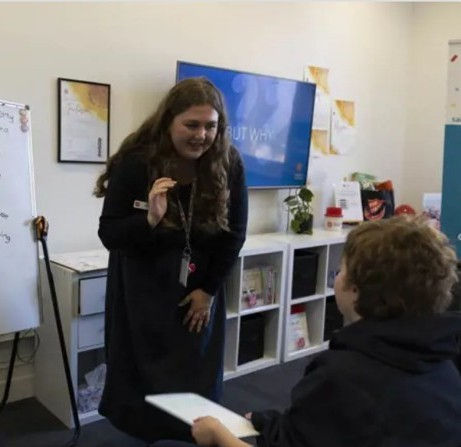
Since its inception over 10 years ago, the Salvos Schools Homelessness City Tour has expanded across the nation with great success, providing an educational and impactful experience for students in Years 9 to 12. It now operates in Melbourne, Sydney, Perth and Adelaide.
At the heart of the experience is a two-hour journey that combines a one-hour Homelessness Workshop with a one-hour city tour.
The workshop uses activities, videos and discussion to unpack how and why people experience homelessness in Australia, challenge common stereotypes and explore the many ways The Salvation Army supports people facing hardship.
Students then head into the city, walking a circuit through the CBD and stopping at locations where people have previously slept rough.
With permission, educators share true, de-identified stories from people who once stayed in those places, helping students connect lived experience with the realities around them.
For Grace, that is where it becomes about connecting with someone’s story.
“It’s taking students out of the classroom and providing an immersive and formative kind of interaction around homelessness to come to a place of compassion, to see homelessness for what it is, a human rights issue,” she explained.
“The Salvation Army is advocating for a future where homelessness is rare, brief and non-recurring. This workshop asks us, as a society or a school community, to consider how we can better address the issue.”
READ MORE: My experience of joining the tour
In Melbourne, the Salvos Schools team works closely with Salvos Project 614, whose staff are based at its Bourke St site. The city tour provides schools with an opportunity to learn how The Salvation Army is responding to homelessness and the services and support it provides to the community.
The reality of homelessness often challenges students’ first impressions as they embark on the two-hour tour.
Many assume homelessness only means sleeping rough.
Through the workshop, they learn that rough sleeping represents only a small proportion of homelessness, while many others experience homelessness in overcrowded housing, supported accommodation, boarding houses, staying with other households, or in other temporary accommodation.
For many students, it’s a turning point.
Bronwyn Covill, Victorian Schools Engagement Program Leader, says that realisation is often one of the day’s biggest moments.
“One of the biggest takeaways they get is that they didn’t think homelessness was a real problem,” she says. “Then they come out realising it’s a much bigger problem than they thought and also that it’s in every community, not just the CBD.”

The Salvos Schools Homelessness City Tour runs every day of the school term, with groups of around 25 students participating in each session. Students who engage in the tours come from schools across all divisions, with Year Nine students often taking part to complete a city experience that forms part of the Victorian curriculum.
The tour is one of more than 13 educational programs aligned with Australian curriculum standards, usually centred on a Salvation Army service or theme.
Addressing topics such as homelessness and financial hardship, the programs use age-appropriate language to equip students to understand these issues and to know how to seek support for themselves or others.
But the impact doesn’t stop with students.
The homelessness tour program also creates powerful opportunities for local corps to connect with schools.
Those introductions can spark lasting partnerships. Whenever a school books the tour, Salvos Schools invites local corps representatives to attend, meet teachers and students, and share the work underway in their own community.
These connections can have a lasting impact – and break down barriers.
“Schools are so warm to The Salvation Army,” Grace says.
“They have brought their students to learn about The Salvation Army. When a local Salvos representative attends the tour, students can put a face and a name to the Salvos building down the road from them. It means local students, and their families by extension, can better understand our local programs and services … it breaks down barriers.”
It is hoped that the experience marks the beginning of an ongoing relationship between schools, the corps, and the local Salvos teams.

Schools regularly organise fundraising events, sleep-outs, casual clothes days and donation drives, while others begin volunteering with their local corps or Salvos stores.
Some of the outcomes have been extraordinary – and inspiring.
“There are so many benefits that I’ve seen when a corps has come along because they’re able to follow the tour and speak to some of the teachers,” Grace says.
“I've seen beautiful examples of ongoing support locally in terms of fundraising. I’ve also seen schools starting up meal programs for corps. I know of one school that sent school maintenance staff to volunteer at a corps, and they built a community laundry. So, you just don’t really know what’s going to come from that connection.”
Sometimes the inspiration becomes deeply personal.
Students have made fundraising bookmarks to sell to their friends and families; others have written letters to their MP, volunteered at their local Salvo stores or through the local corps.

So, what spurs them on? Quite simply, they find the experience of the homelessness tour quite surprising.
“We get a lot of ‘it was eye-opening’ in our evaluation forms and ‘we didn’t know it was that big of an issue’,” Grace explains.
“They feel motivated to better address it, through a greater understanding of it, but also this increased empathy, compassion. You can often feel that students feel inspired to act, which is really lovely.”
Ultimately, for the National Schools Engagement Manager, one of the most important outcomes is shifting everyday conversations.
“We emphasise that one of the simplest and most powerful ways students can make a difference is by continuing the conversation. Homelessness has too often been swept under the rug in previous generations,” she says.
“And I believe that this workshop tears that rug out. For this generation to go forward with the knowledge, compassion and confidence to respond to homelessness, they’re not just changing the conversation; they’re changing the future.”
For more information on Salvos Schools and the Salvos Schools Homelessness City Tour, click here.


