Search Results
Search this site
3122 results found with an empty search
- God’s hand guiding Grafton
Majors Cathryn and Mark Williamson with Reverend Ron Watson from the Grafton Uniting Church where the Salvos co-located for more than a year after their building flooded. By LAUREN MARTIN The start of 2022 was an exciting time across Australia. Many COVID-19 restrictions were easing, and Salvation Army corps and centres were looking forward to the ‘new normal’ that had been dreamed of and prayed about for so long. At Grafton, on the NSW mid-north coast, the new corps officers, Majors Cathryn and Mark Williamson, had started their appointment during the COVID-19 lockdown period, so all of the corps’ ministries were not operational, and Sunday Service was online. “We had a Home League group of ladies that continued to meet when possible,” said Cathryn. “They did have a Mini Muso’s group that had probably 60 or 70 attendees, and that was closed due to COVID, and they ran a Messy Church monthly.” With great anticipation and excitement, corps members gathered together on 27 February for their first Sunday meeting without restrictions. Less than 24 hours later, all plans for re-opening ministry and services were dashed. “At 4am on the 28 February, Mark got a phone call to say there was water in the hall,” said Cathryn. Grafton Corps had flooded beyond repair, with water levels even higher than a previous devastating flood in 1988. A divine partnership With flooding impacting several areas around Grafton, Cathryn and Mark were deployed to operate evacuation centres for the Salvation Army Emergency Services (SAES). It was a busy time, but meeting together for worship on Sunday was a priority, so the first week after the flood, the corps organised to meet at a church in south Grafton that had been generously offered to them. What happened next was a divine partnership. A flood in 2022 forced Grafton Salvation Army out of its building and into a ‘new space’ physically and spiritually. Many local churches had offered the Salvos the use of their hall, but one stood out as the ‘right’ one. The Uniting Church was just around the corner from The Salvation Army’s flooded corps, which suited many in the congregation who walked to Sunday meetings. “The Uniting Church has a 9am service, and we usually had a 10am service,” said Cathryn. “We decided to join them for the morning tea and hold our service in their church hall at 11am.” “Many from each congregation have said how nice it’s been to get to know people in other congregations,” said Cathryn. Mark joined the Uniting Church worship team as their piano player, and he has been able to make announcements during their service, which has allowed members of the Uniting congregation to “join us on mission,” said Cathryn. Through relationships, the number of people invested in The Salvation Army in Grafton has grown, with more volunteers for Bunnings barbeques, gift wrapping at Christmas time and Red Shield Appeal collections. Volunteering opportunities Peter Dobinson is a Uniting Church parishioner who has relished a stronger connection with The Salvation Army this past year. A passionate Red Shield Appeal supporter, Peter has door-knocked and collected for The Salvation Army for the past 20 years. Peter Dobinson from the Grafton Uniting Church assists the local Salvation Army in its Red Shield Appeal ministry. “I love the Sallies and the work of the Sallies,” he said. “They have a [Red Shield Appeal] form on our noticeboard at the church asking who wants to volunteer, and I’m first cab off the rank!” For Peter, volunteering at collection points allows him to “work for the Lord” and chat with people in the community. He said he would miss the Salvos congregation when the rebuild of the Grafton Corps is complete, but he is happy that the past year of connection has created strong connections. “There’s been a lot of brotherly bonds formed.” Rebuild for greater missional connection Cathryn and Mark firmly believe that the extra year of ‘isolation’ outside of their corps building due to the flooding has been God’s blessing for the corps. Despite the inconvenience and heartache of being unable to restart some previous ministries, the time to build relational connections and pray about the future has been worthwhile. “The danger was that we go back to the ‘old’, or the ‘familiar’ is probably a better word for it,” said Cathryn about the post-COVID return. With the Grafton Corps being refitted, the flood has given the corps a chance to pray and plan for the ‘new’. “I see a hive of activity with lots of people,” said Cathryn of her vision of the new space. A new kitchenette going into one of the corps’ halls will make it more usable and able to be hired out to community groups, and a complete rebuild of the toilet and shower block has been long overdue. Corps members can’t wait to start opening up their new building as a drop-in centre one or two days a week and start connecting with people through Salvos Connect again. (During COVID and after the flood, community members granted gift cards through The Salvation Army’s PAL – Phone Assistance Line – have been getting the cards posted to their address rather than meeting with local Salvos to collect the cards and interact.) Christian connections Salvationist Judy Salter has been a Soldier at Grafton Corps for 36 years and was the manager of the Family Store for 20 of those years. She says the past year being co-located with the Uniting Church has been a beautiful experience of getting to know other local Christians. “We have met a whole church of new people. Some of the people we already knew, a few I knew by sight but not by name. Now, because we have been coming here 12 months and we have gotten to know them more on a personal level, it’s been wonderful.” Salvationist Max Salter (left) with Uniting Church attendee Christine McAulay (middle) and Salvationist Judy Salter (right). But, she says, she and other corps members are yearning to return to their own space and see community connections start again. The Salvation Army’s practical faith attracted Judy and her husband many years ago, and despite a recent health scare, Judy is itching to get back to mission and outreach. “I want to see us open more to the community and getting the community more involved in what we could be running at the church,” she says. “After-school programs, basic cooking lessons ... I would love to see it more open to the community, and we are looking at how we can have our doors open to people who are struggling.” Whilst Cathryn and Mark and the corps haven’t settled on exactly what the new rhythm of corps mission will look like, there are certainly lots of ideas and enthusiasm. One of those ideas gaining traction is a gentle exercise class for older people, which they plan to call ‘Easy Moves’. This may coincide with a cooking class called ‘Easy Eats’. “There are a lot of lonely people in our community,” says Judy. “I’m sure there are plenty of things we can do to make ourselves available ... even if it’s just being open for a cup of tea and a biscuit for people who just want to talk.” Watch this space ... Grafton Corps is planning a reopening celebration within months. Please keep Cathryn and Mark, their corps and the local community in your prayers as they seek God’s heart for future directions.
- Inspiring stories highlight Red Shield Appeal launch in Canberra
Major Peter and Captain Tara McGuigan, and Captains Kim and Steve Haworth, with Shieldy at the Canberra Red Shield Appeal launch. Photos: Greg Donovan By MAJOR PETER McGUIGAN The Salvation Army has held a business breakfast in Canberra to help promote the Red Shield Appeal during a sitting week of Parliament. The keynote speaker at the 24 May event at Canberra Rex Hotel was the Hon. Dr Anne Aly MP, Minister for Early Childhood Education and Minister for Youth. Dr Aly shared how she arrived in Australia from Egypt as a young girl with her family in the late 1960s, living at different times in Albury and Brisbane before settling in Sydney. She told of how The Salvation Army had been there for her family in those early years, starting in Brisbane. By her late 20s, she was a single mum with two young boys, a victim-survivor of family and domestic violence. Again, The Salvation Army journeyed with her through these tough times when she lived on the minimum wage. She described the trajectory of her life from that point as “very fortunate”. Dr Anne Aly MP shares her life story at the Canberra launch. “I’m immensely grateful for the way you helped – without judgment, without casting blame – a woman who was at the lowest point in her life,” she concluded. “I know how much The Salvation Army does, but I also know how much it means to the individuals they help.” * Testimonial speaker Susie Slapp, from Canberra City Corps, was also grateful for how the Salvos had helped her. Interviewed by corps officer Captain Sally Stevens, Susie revealed the seemingly insurmountable challenges she had overcome with the help of The Salvation Army, including dysfunctional relationships, alcohol abuse and attempting to take her own life. “I woke up one morning and saw the mess I was in and said, ‘I can’t do this anymore.’ I got on the phone and found a detox service, and I found The Salvation Army Canberra Recovery Services. That was the beginning of me coming alive. I was alive, but I wasn’t living. Now I’m the happiest person I have ever, ever been.” At the start of the event, Emcee Alex Sloan AM welcomed attendees and special guests, including Federal Parliamentarians and Members of the Legislative Assembly of the Australian Capital Territory. Senator Dean Smith represented the Hon. Peter Dutton MP, Leader of the Opposition, and Mr Deepak-Raj Gupta represented Andrew Barr MLA, Chief Minister of the Legislative Assembly for the Australian Capital Territory. Ms Sloan also thanked Mr Peter Barclay and the King O’Malley’s Hotel, who sponsored the breakfast. Also present were Air Chief Marshal Sir Angus Houston AK, AFC, former Chief of the Defence Force, Ngunnawal Elder Nin Jannette Phillips, who shared a Welcome to Country, and senior Salvation Army leaders Colonel Winsome Merrett, Chief Secretary, and Colonel Rodney Walters, Secretary for Communications. Captain Kim Haworth, Divisional Commander for NSW/ACT, presented her own welcome and challenge to partner with the Salvos by giving to the Red Shield Appeal. “Amid the rising cost of living, the Red Shield Appeal this year will focus on bringing to life the struggles of everyday Australians,” Kim said. “We are asking you to please dig deep and do what you can to help us extend our reach.” His Excellency General, the Hon. David Hurley AC, DSC (Rtd), Governor-General of Australia, brought his support for the Red Shield Appeal and a greeting via video link. “The Salvation Army is one of Australia’s most recognisable and trusted charities,” said the Governor-General. “The Salvos have been part of our social fabric for more than 140 years, supporting everyday Australians when they need them the most.” Mr Andrew Balzanelli, Salvos’ Canberra Advisory Committee member and Senior Director of the Jones Lang LaSalle property management group, steered attendees through two opportunities to donate. At the end of the formal part of the event, Colonel Winsome Merrett thanked participants and prayed for Australia. Nearly $70,000 was donated, including a lead gift from the ACT Government of $15,000. David McIntosh secured a signed ACT Brumbies rugby jersey at the Canberra launch with a $700 donation bid. “I want to say thank you to the Hon. Dr Anne Aly MP,” Winsome said. “And also to Susie. Your stories, I believe, have inspired us today. You remind us that this sense of hopelessness, shame and humiliation pervades one too many people across this nation, and we want to change that. I believe the presence of so many in the room today and the donations given will help us to see that change. Such generosity makes a difference to those who are struggling, feeling alone and disconnected.” More than $5000 was then added to donations through an auction of items especially given to the Salvos. Officiating were Salvos’ Canberra Advisory Committee Member Craig Wagstaff and Steve Thomas from the Edge Real Estate Group. Items included Salvos socks signed by the Governor-General and Mrs Hurley, Christmas ornaments made for Government House, a Canberra Raiders jersey signed by the Raiders team, and a signed Brumbies Jersey. * An abridged version of Dr Aly’s speech will be published in Salvos Magazine , 17 June edition.
- • Canberra flying our flag
Two-hundred flags lining the road outside Parliament House and along Kings Avenue in Canberra brought a reminder of the Red Shield Appeal to commuters and politicians throughout the month of May. By KIRRALEE NICOLLE Each year in Canberra throughout May, 100 Salvation Army flags fly along Kings Avenue and Commonwealth Avenue leading up to Parliament House in Canberra during the month of May. This year, however, the display held extra significance. With interest rates and living costs rising across the nation, Australians everywhere are feeling the pinch. In Canberra, average rental costs sit just below those of Sydney at $784 a week, according to SQM Research. With temperatures dropping, those doing it tough without adequate housing are seeking intervention from charities such as The Salvation Army. Assistant Public Relations Secretary for NSW/ACT Captain Tara McGuigan said these difficult circumstances made this year’s flag display more pertinent. “[It] gives people a sense that there’s some place we can go, someone who will help us,” she said. “It's very powerful.” Tara said staff and volunteers were finding that new struggles were arising among those who visited Salvation Army centres looking for help. She said along with a need for clothing, care packages and assistance to pay bills or find housing, other needs were found to have been neglected in order to survive. “People are foregoing their medical requirements because they're trying to feed their families and look after their children,” Tara said. “We have store and centre managers who have actually helped to channel them through to doctors and [other] medical appointments.” She said the flags offered reassurance to those doing it tough. “The sense of security that people seem to get from knowing the Salvos [are] around is quite incredible,” Tara said. “When people are in that sort of desperate situation and they know they can walk into a Salvo shop or service, it's really good.” She also said the location of the flags near Parliament House, where Salvation Army government relations and policy and advocacy staff also had their offices, served to further place the work of The Salvation Army directly in front of federal parliamentarians. “They see the Salvos in Parliament when they're walking the corridors, and then when they come out and see the flags, it's a good reminder for them,” Tara said. “It builds awareness about what goes on [and] that they're serving the community.”
- • UK Salvos march for Earth
Salvos in the UK recently took part in the ‘No Faith in Fossil Fuels’ event in London. A group of Salvos and supporters took part in the ‘No Faith In Fossil Fuels’ worship gathering and pilgrimage to the Houses of Parliament in London recently, part of ‘The Big One’ climate rally. The Big One climate protest aimed to bring 100,000 people to protest outside parliament on 22 April 2023 (Earth Day), with a Christian service and pilgrimage to Westminster on 21 April. Salvationist Lizzy Kitchenside, said, “We cannot claim to love God and love others and ignore this crisis. Our inaction speaks loudly ... I walk for my future, for the planet, for justice but, most importantly, I walk for and with God.” ‘Care for Creation’ is one of five mission priorities of The Salvation Army in the United Kingdom and Ireland Territory, and The Salvation Army joined with other faith organisations to praise God, pray for national and global leaders, and show that they want decisive action to tackle the climate crisis. World Environment Day is being celebrated on Monday 5 June.
- The power of one in caring for our world
We can all join the movement to end plastic pollution in our time. By MAJOR MELANIE-ANNE HOLLAND This year, World Environment Day turns 50. For half a century, 5 June has been observed as the United Nations international day of engagement, with the aim of deepening people’s environmental awareness and pursuing greater cooperation for the care of the Earth – our common home. It is worth asking how much we have achieved in that time. Set against the present ecological crisis, it is easy to be pessimistic, but World Environmental Day has certainly garnered a greater social awareness about the need to care for the environment and the global dimensions of that need. Over the years, World Environment Day has drawn attention to ozone layer depletion, toxic chemicals, desertification and climate change. It has been a platform that encouraged us all to value clean air, forests, rivers and seas, and to strive together to protect our common home. On the 50th anniversary of World Environment Day, the theme is ‘Stop Plastic Pollution’. Here’s a quick hit of facts: • More than 400 million tonnes of plastic are produced every year worldwide (the equivalent of 137kg of plastic per person every day). Of this plastic, half is designed to be used only once and less than 10 per cent is recycled. • It is estimated that 19-23 million tonnes of plastic end up in lakes, rivers and seas annually. • Microplastics (tiny plastic particles up to 5mm in diameter) find their way into food, water and air. It is estimated that each person on the planet consumes more than 50,000 plastic particles a year – and many more if inhalation is considered. • Discarded or burnt single-use plastics harm human health and biodiversity and pollute every ecosystem in the world, from mountaintops to ocean floors. While the breadth of the issue of plastic pollution is (literally) breathtaking, the good news is that every person has the capacity to make a difference and reduce plastic waste. As individuals, families and communities, in partnership with businesses and government, we can effectively end plastic pollution. “Every person has the capacity to make a difference and reduce plastic waste.” Plastic pollution is a reflection of our culture, where things are so readily thought of as ‘disposable’. We simply throw things away, not really considering where they go or what happens to them. The next time we want that product, we simply buy a new one, and the cycle starts again. I continue to be inspired by stories of people pursuing zero-waste lifestyles, not only eliminating plastic pollution but challenging the wasteful- ness of our contemporary lifestyle. They offer a different perspective, modelling a more thoughtful way of living, seeing all waste as a precious resource that can find new life, time and again. Could waste be a spiritual issue? It is possible that most of the rubbish we generate is grounded in attitudes such as indifference and ingratitude, failing to see the true value of things before us. I am reminded of a story of Jesus where he miraculously fed a massive crowd (see John chapter 6, verses 1-13). As the thousands of men, women and children disperse, he tells his disciples to gather the pieces that are left over. “Let nothing be wasted,” he says (verse 12). On this World Environment Day, I invite you to be more ‘waste conscious’ and become part of the movement to eliminate plastic pollution in our lifetime. May we hear Jesus encouraging us, “Let nothing be wasted.” SIMPLE ACTION STEPS • Actively reduce what is going into your bin • Buy items with less packaging • Recycle everything! • Put in the effort to research options for items that are harder to recycle • Compost food scraps • Stop impulse shopping • Pick up some litter when you are out and about un.org/en/observances/environment-day
- Everything, everywhere, all at once
By MAJOR PETER McGUIGAN From the upper windows of our home in Canberra, you can look out on a clear day and see the majesty of the Brindabella Ranges in one direction and the beauty of the Molonglo Valley in another. Right now, Canberra’s notorious winter freeze is kicking in, and most mornings a heavy white mist hovers over the Molonglo River – adding something ethereal, perhaps even spiritual, to our view. Three months have passed since I moved to the nation’s capital, and still every morning I observe and breathe into my whole being the magnificence of the earth in front of me. It’s an inspiring way to start the day, particularly as the sun rises. Often a prayer comes onto my lips: “Thank you great God for the earth, our home. Thank you for the love and awesome attention to every detail that is evident in what you have made.” It also occurs to me that the damage human beings have inflicted on the earth and its environment is not always noticeable, and I have sometimes wondered if the environmental decline is actually as serious as what earth scientists tell us. But then I consider the poor state of the Great Barrier Reef, for example, and the occurrence of coral bleaching. In the past three decades, the reef has lost half its coral cover and is on course to lose it all within 10 years, particularly in its central and southern regions. Biodiversity loss is another example. The demise of habitats and the related extinction of species has escalated at an alarming rate in recent years. And the earth’s ice caps are melting. NASA (National Aeronautics and Space Administration agency of the United States) says that “Antarctica is losing ice mass at the average rate of about 150 billion tonnes per year” and that “Greenland is losing about 270 billion tonnes per year, adding to sea level rise”. This is undeniable evidence of the impact of human activity on the earth. Our large-scale burning of fossil fuels, unbridled deforestation, and our unthinking reliance on non-recyclables such as single-use plastics are three patterns of human behaviour behind the self-made dilemma we now face. Environmental decline is actually much worse than many of us think. Our commitment The good news is that more and more of the world’s citizens, organisations and governments are signing up for climate action. Collectively and individually, the environmental measures we are taking now are critical. Humanity cannot afford to ease up any time soon in its resolve to arrest environmental decline and give the earth the opportunity to heal itself. And it’s not tokenism; it’s about transforming how we live and taking responsibility for the earth without going back to our old reckless ways. Nurturing this renewed sense of being custodians of the earth and letting it fully flourish is key to our future. On the eve of World Environment Day 2023 (5 June), with its theme ‘Beat Plastic Pollution’, it would be helpful for us all to take stock of our efforts and what we have committed to do. Here is a list of four: • Recycling and waste reduction: We are committed to recycling everything that is recyclable, to vege gardens and composting, and to replacing non-recyclables such as plastic bags and single-use cups. • Clean energy: We are committed to transforming our energy sources from carbon-based to renewable. Every home in Australia should have solar installed. And we can switch to renewable energy suppliers. • Transport: We are committed to transforming our vehicles from petroleum-fueled to electricity-fueled. As technology advances and electric vehicles go down in price, all of us should be looking to drive an electric car. In the meantime, we can leave the car at home and cycle or walk when possible. We can also reduce the number of long-haul flights we choose to take. • Planting trees: We are committed to restoring the natural ecosystem through planting trees. You can do this on your own or, more effectively, as part of an organization committed to tree planting. Plants and trees help the planet to breathe. They absorb carbon like nothing else and, in the process, produce oxygen. The organization I work for in Australia, The Salvation Army, in partnership with energy company AGL, is currently installing solar in more than 850 sites across the country. The Salvos are also exploring introducing electric vehicles into their fleet and already have many hybrid vehicles. In a lot of cities now, electric buses are replacing petrol buses. To pinch the title from the recent Academy-award winning film, our strategy should be everything, everywhere, all at once. To read The Salvation Army’s International Positional Statement ‘Caring for the Environment, click here https://www.salvationarmy.org.au/portlincoln/news/2021/10/15/caring-for-the-environment/ Major Peter McGuigan is The Salvation Army’s Head of Government Relations Australia. His new book titled A New Day: Writing During the Pandemic on Relationships, Responsibility and Spiritual Renewal comprises 11 chapters reflecting on the possibility of ‘a new day’ for humanity in our post-pandemic experience. The book includes stunning landscape photography of earth and ocean scenes by Peter’s son, Gareth McGuigan, that depicts the concept of a new day visually. There are also prayers and reflection questions to help readers go deeper. To make the most of the photos, the production is 12 x 12 cms. You can purchase a copy of A New Day at http://salvationarmysupplies.com.au/a-new-day/ or at Koorong Stores nationwide.
- The Salvos and climate change
An aerial view of the new Dandenong Salvation Army complex showing the solar panels that have been installed. Photo: AGL By MAJOR PETER McGUIGAN In Australia, The Salvation Army is committed nationwide to remedial action towards reversing environmental decline. For example, right now the Salvos are exploring introducing electric vehicles to their fleet, which already comprises a significant number of hybrid cars. Sunbury Corps in Victoria with its newly installed solar panels. One significant commitment The Salvation Army has made is to transition their properties across Australia from carbon-based energy to solar power. A 15-year renewable energy partnership with AGL was announced last November in which the energy supplier will install solar energy systems at more than 850 Salvation Army sites. The goal is to reduce the Salvos’ greenhouse emissions by at least 17,500 tonnes of CO₂ equivalent. It would also generate substantial savings on running costs, noted Salvation Army Chief Secretary Colonel Winsome Merrett as she launched the project, freeing up additional funds to resource the Salvos’ frontline work in Australia. The Salvos’ first electric vehicle, based in South Australia. The first site commissioned was in Coburg (Vic.), and significant work has been done to progress the project nationally in the last five months. In a recent update, the Salvos Environmental Projects Coordinator, Elyse Anderson, said that the current solar capacity is around 2.15 megawatts (MW) and that 134 sites had been completed. “Over the coming months, around 4.02 MW will be installed on commercial sites,” she confirmed, “bringing us to a total of 6.17 MW.” As well as the Salvos mission sites, Elyse reported that solar installations in several Salvation Army officers (pastors) quarters had been completed in the Northern Territory and South Australia. These had been the result of government rebates that were no longer available. Future residential installations would be a part of the partnership between The Salvation Army and AGL. It is anticipated that commercial installations will be completed by August 2023. The joint venture with AGL will also position the Salvos to decarbonise their mobile outreach services through trial battery storage and electric vehicle (EV) charging stations at select locations across Australia.
- Tribute for Major Lyall Reese
To read Tribute report click here
- Youthlink – helping young people achieve their full potential
Youthlink provides a variety of services and programs to assist young people on their road to adulthood. By ANTHONY CASTLE James Selby is the manager of Youthlink services in Blacktown, Sydney, and has worked with The Salvation Army for nine years. Youthlink supports young people at risk for various reasons, such as homelessness, drug and alcohol problems, social isolation, mental illness and family trauma. Formerly a builder for 20 years, James found himself at a turning point and began to use his skills for a good cause. “I had spent years managing people, handling contracts, and while some of the work now is much the same, starting at Youthlink was a fresh start,” James says. “Youthlink is The Salvation Army’s specialist youth service for Greater Western Sydney. It’s a wide range of services, like mental health and disability services for young people, with our Skills for Life program. We work with a varied range of kids, but most of them are young people who don’t have great have social supports.” James Selby heads up The Salvation Army Youthlink in Sydney. Skills 4 Life is a specialist youth disability service located in Blacktown, providing client-centred quality services to young people with a disability and their families. The Skills 4 Life team offers a range of programs that combine recreation, vocational and life skills to assist young people, encouraging their independence at home and within the community. “We provide day programs, holiday programs and after-school programs for young people with disability,” James says. “We’re offering the supports that build the life skills young people need, cooking, health, social skills, finances, job applications, whatever the needs are.” Youthlink and selected Headspace youth mental health centres are working collaboratively to provide the Headfyrst program, an innovative and free service for young people experiencing co-existing AOD and mental health issues. Headfyrst is about providing resources, counselling, and support to help young people work through their recovery journey. Youthlink believes that every person has potential, despite their life problems and experiences, no matter their backgrounds. “Headfyrst is our mental health AOD program across greater western Sydney,” says James. “It’s a collaboration. We employ psychologists and partner with Headspace in six of their centres. Each program is providing counselling and support for young people experiencing AOD and mental health concerns. Mental health doesn’t discriminate in terms of your special economic circumstances.” The Headfyrst and Headspace teams are co-operatively involved in ongoing care coordination, offering a confidential program encouraging open communication between young people and their clinicians. “Pressure can come from all sides of situations; it’s all relative,” James explains. “It can be a child that hasn’t been seen at school for eight months. We have a program called Reconnect that connects young people with school and education and prevents homelessness. With a lot of young people, when they get out of their school routine, it’s hard to get back into it. Breaking that routine can create added anxiety. Our biggest spike in need is around anxiety and depression, during COVID and post-COVID, but now with cost of living as well.” The Headspace National Youth Mental Health Survey has revealed that the cost of living is the single biggest concern for young Australians, with the affordability of housing and rent also significant causes for worry. “Mental health can start to get worse when they’re approaching Year 10 or Year 12 when other students are going to university and starting to work,” James says. “With the cost of living, we’re seeing it in middle-class families as well. There’s this idea that you’re not a good parent if your child is struggling, but some of the best parents have come into my office.” Youthlink believes that every person has potential, despite their life problems and experiences, no matter their backgrounds. Youthlink’s core work is to help disadvantaged young people achieve their full potential. Managing this work has been a fresh start that James has cherished over the last decade. “I think every young person has potential,” James says. “To help one young person achieve that, or give them the resources they need to grow better, is a huge privilege. I couldn’t survive what some of these young people go through. I am consistently amazed by the resilience of young people and how much potential they have.”
- Youth LARFing their way to a better future in Ballarat
The LARF youth support service in Ballarat, Victoria, has been proving assistance to at-risk youth for two decades. By KIRRALEE NICOLLE A youth mentoring program in Victoria’s Central Highlands is celebrating 20 years of providing young people opportunities to connect safely with adults in their community. The Salvation Army Karinya Support Service LARF (life skills, activities, relationships and fun) Mentoring Program in Ballarat assists youth who have experienced homelessness, trauma or social isolation to encounter those from different backgrounds than their own and learn how to engage more effectively with those around them. Volunteers from the Ballarat area between the ages of 20 and 30 are encouraged to apply to be involved. Program coordinator Jasmine Darge said the fortnightly group sessions offered activities based on life skills, relationship building, self-care, health and wellbeing and having fun through play-based therapy. “Most of them are disengaged from school and have existed in a family violence situation,” she said. “[We’re] giving them that space and opportunity to just be kids when a lot of them aren’t able to be.” Jasmine said many participants started out shy and introverted, but many who had left the program were now employed, seeking out study options or giving back through volunteering in community programs such as the Country Fire Authority. She said they chose volunteers from varied career backgrounds between the ages of 20 and 30, as this demographic offered the participants adults to look up to who were not as likely to be viewed as pseudo-parent figures. “Their role is as a mentor, so they’re a safe person to role model good behaviours and appropriate relationship building and introduce [participants] to the community,” Jasmine said. Program assistant Helena Gray said all volunteers were provided trauma-informed training in strengths-based approaches before starting in the program. “They do all of that training before engaging, so they’re not jumping in with no experience or knowledge because, obviously, they’re dealing with some really high-needs kids,” she said. Helena said the leaders did not have set expectations for what LARF participants would go on to achieve, they just wanted to see them on a healthy trajectory that led away from disadvantage. “We want them to be able to feel empowered to follow whatever path feels right to them,” she said. “For some of them, it might take a long time to get on their feet, for others, it might be straight off the bat, but we just [want to] make sure they’ve got the tools to understand how to exist in their community as a person [who] disrupts the cycle.” To get involved in the LARF Mentoring Program, you can fill out an application form here
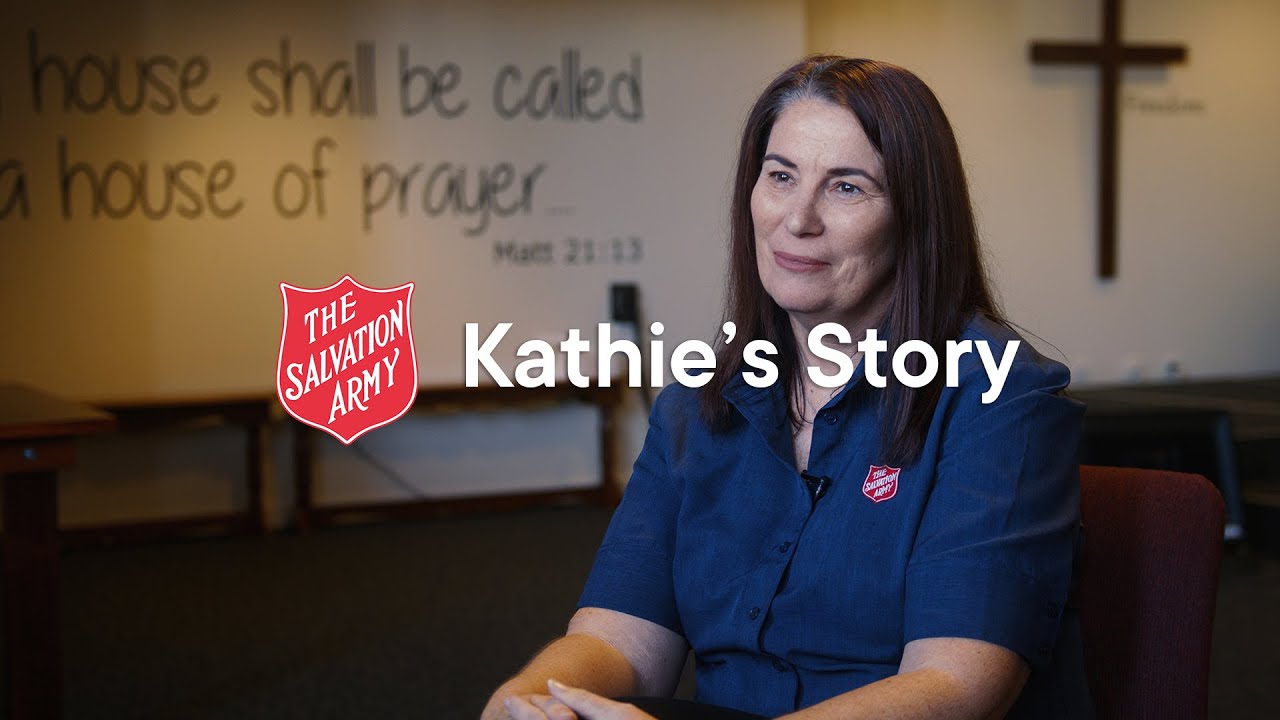
- Salvo Stories: Kathie’s Story
Kathie grew up in foster care and then lived on the streets of Kings Cross in Sydney. At 15, she saw her life spiralling towards drugs, prostitution and alcohol. She knew she didn’t want that for her life but didn’t know how to get out of it. Going to a safe house one evening and then a church service the next morning radically turned her life around. Today, she works as a family ministry leader training mentors to journey with struggling families through the COACH program. Kathie says that her philosophy on life very much aligns with The Salvation Army – being like Jesus, who walked with people and journeyed in relationship with them.
- Cultural immersion builds deep understanding and connections
Daily yarning circles were part of the cultural immersion training in Sydney for cadets and Eva Burrows College Officer Formation staff. By SIMONE WORTHING “The cultural immersion training was a wonderful experience,” said Kirsten Wood, cadet-in-appointment at Perth Fortress Corps. “I spent quite a lot of my childhood and teen years in a city with a high percentage of Indigenous Australians, so I wasn’t too sure if I would learn more than I already knew. Boy, was I wrong! I learned so much from our experiences throughout the week, I have developed a deeper understanding of the Indigenous and Torres Strait Islander culture.” Yarning circles, walks around historical sites and discussions with Indigenous leaders were all part of the Eva Burrows College (EBC) recent cultural immersion program for Salvation Army cadets and Officer Formation staff at EBC. The training took place in Sydney on 30 October to 6 November 2022. Major Sharon Sandercock-Brown (Mission and Ministry Coordinator at EBC) worked with the Officer Formation Team, Captain Tamaryn Townsend (Officer Recruitment Secretary), Shirli Congoo (General Manager Aboriginal Torres Strait Islander Ministry) and Sue Hodges (Aboriginal and Torres Strait Islander Co-ordinator NSW/ACT) to put the program together. Shirli and Sue led the activities throughout the week. These included watching and discussing the Mabo movie and the Australians Together series, a cultural walk around inner-city Redfern and a visit to Clark Island in Sydney Harbour for an experience of history, lore and dance. The social enterprise Tribal Warrior, which shares and empowers connections to culture and family, organised the excursions. The group also interviewed a panel of three with different roles in The Salvation Army around how they engaged with and learned from Aboriginal and Torres Strait Islander people and culture. Panel members were Rod Yule (General Manager of Local Mission Delivery and Resources), Melissa Winnel (Operations Leader at Sydney Streetlevel Mission) and Lorelle Vince (Team Member, Greater West Salvos). Cadets from all over Australia joined the cultural immersion training in Sydney. “We weren’t just sitting in a classroom all week,” Sharon emphasised. “As well as our activities, Shirli and Sue also led yarning circles each evening where we shared our experiences and what we had learned.” On the Friday, the group visited Kamay National Park, where the First Fleet landed in 1788. “We were able to respond, based on our learning, and do our ‘sorry’,” said Sharon. Delegates also visited the Scarred Tree Indigenous Ministries at St John’s Anglican Church in nearby Glebe. On the final day of the training, the group worshipped together, spoke about their response to the week and focused on how to work for justice in the area of Indigenous Ministries. “We were truly blessed to facilitate the cultural immersion in NSW/ACT,” said Sue, quoting 1 Peter 2:15-16. “The truth sets people free, and this week we witnessed many reconciliation moments and built connections that will last a long time after this week. The team and cadets were such a great bunch to hang out with.” Kirsten added more about how the week had changed her thinking. “I had impactful moments of realisation which have brought me to a space of deep respect for our first nations people, and I am so encouraged by the similarities between their culture and our Christian kingdom community ideals,” said Kirsten about the immersion experience. Participation in dance and other elements of cultural life was part of the immersion training. “Moving forward, I want to collaborate with our First Nations people, showing the utmost respect for them and their culture, working towards unity as God’s people.” The cultural immersion training is part of EBC’s Reconciliation Action Plan and part of the overall national strategy for engaging with Aboriginal and Torres Strait Islander peoples. “For us, it’s all about education,” said Sharon. “Our focus was to educate our cadets and staff, to provide opportunities to meet and have discussions with Shirli and Sue, to ask questions and to facilitate learning as we did things together. We also wanted to help set up our group for present and future learning. “Next year, the training will be an individual and local experience where cadets are self-directed to understand local Indigenous peoples, their history, and what is happening in the local context.”