
New partnership powers up Melbourne’s frontline workers

BY LERISSE SMITH
Frontline workers supporting some of Melbourne’s most vulnerable community members are set to benefit from a groundbreaking partnership between The Salvation Army’s Melbourne Project 614 and the University of Canberra.
The pioneering alliance will transform community training and support for frontline workers and volunteers, launching a tailored educational pathway in May designed to strengthen and sustain the Project 614 workforce as it continues to recruit and train new staff and volunteers.
Through the partnership, Project 614 employees and volunteers – who work with people experiencing homelessness, isolation, poor health, and complex social barriers – will now have the opportunity to upskill with a Professional Certificate in Foundations for Working and Volunteering in Community Organisations. It is designed to equip workers with the knowledge, skills and confidence required for effective frontline community work.
“We are very excited about the partnership,” said Project 614 Team Leader Major Brendan Nottle, as he reflected on the pilot initiative.
“It is a fairly unique partnership that’s happening. It has been an exciting journey during the past 12 months where the academics that we have been working with, Professor Rachel Gibson and Professor Tanya Lawlis, have been genuinely excited to learn about The Salvation Army’s history, culture and values.
“I think their excitement has actually made our team excited again about our history and our culture, which we should be really proud of as Salvos.”
Bill Shorten (left) officially launched the innovative project, which Major Brendan Nottle said was quite a unique concept.
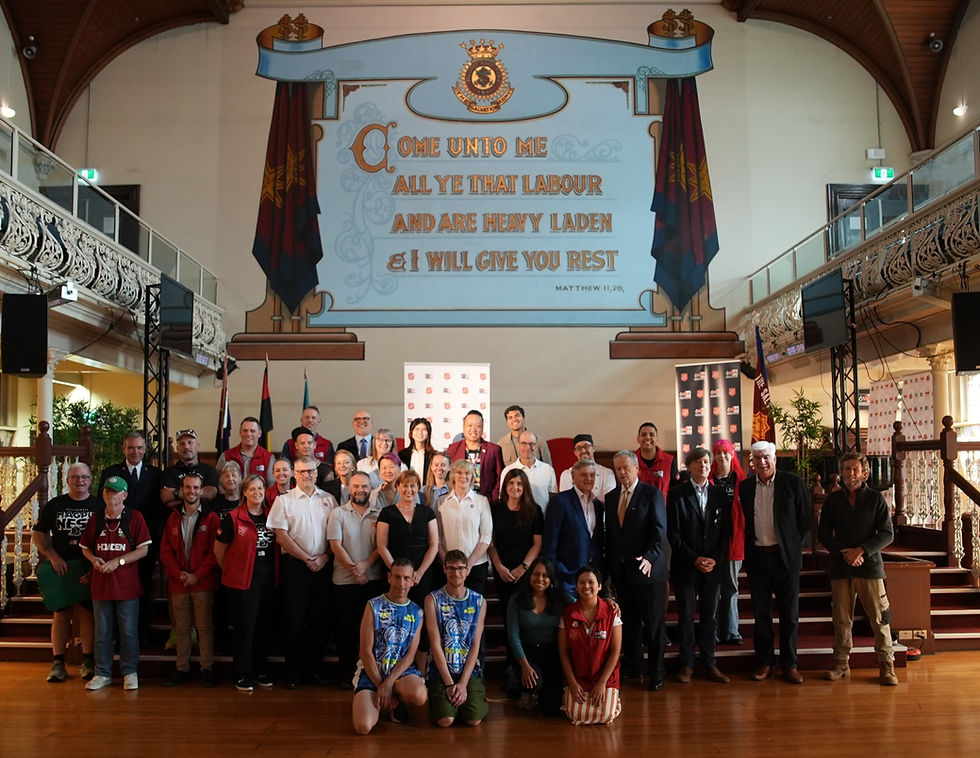
The University of Canberra’s Vice-Chancellor and President, Professor The Honourable Bill Shorten, officially launched the innovative project on 10 March at ‘The Temple’ at The Salvation Army’s premises in Bourke St, Melbourne.
Optimism filled the room as a large crowd celebrated the new venture with the University of Canberra’s (UC) Faculty of Health and Salvation Army employees co-designing the course to ensure the units blend academic expertise with lived practice directly drawn from the work undertaken at Project 614.
The Salvos team involved Brendan, his wife (Corps Officer Major Sandra Nottle), Project 614 Senior Operations Manager Richard Parker and Project 614 Café Supervisor Matthew Daniels.

“Project 614 and UC are strengthening the capacity of the sector, supporting emerging service hubs across Victoria, and creating a pathway that will prepare community workers for the next decade of service,” said Professor Shorten.
“This partnership is more than an educational initiative – it is an investment in people, in community, and in the future of compassionate care.”
And the demand for services is rising.
Brendan said the co-designed Professional Certificate would give Project 614 staff and volunteers the tools they needed to act swiftly, confidently and with compassion.
“This tailored course means our team can respond faster, more safely, and with greater care, so no one slips through the cracks,” he said.
“Training that mirrors real conditions leads to tangible results: earlier identification of health issues, smoother referrals and better continuity of care. That’s how a course becomes a catalyst for community-level change.”
For more than a decade, Melbourne Project 614 has been at the frontline of community support.
Since 2011, the Magpie Nest Café at 69 Bourke Street has been offering free meals, creating a safe space where individuals can find dignity, connection and practical assistance.
The café has evolved into a unique integrated services hub, bringing multiple organisations together under one roof to meet people where they are and remove barriers to essential health and disability supports.
As demand for these services grows, the opening of a new café in Footscray and increasing interest from local councils to establish similar cafes in their own areas highlight the need for a strong, skilled workforce more than ever.
And Professor Shorten has long championed the work of Project 614.
“Project 614 has been doing great work in the community,” he said.
“They have extensive knowledge and understanding of the needs of the communities, so a partnership to deliver an education pathway solution was a logical next step to meet their workforce needs.
“This partnership will build a sustainable, skilled workforce that can support individuals with dignity and professionalism. The one-stop-shop model is guiding similar initiatives across Victoria, and I’m hopeful that with a solid training pathway, it can act as a blueprint for frontline community work across the country.”
Brendan praised the University of Canberra leadership for turning “an idea into a living, breathing pathway for change”.
“The passion of the University of Canberra team has been extraordinary,” he said.
“Executive Dean of the Faculty of Health, Professor Rachel Gibson, and Professor Tanya Lawlis have brought rigour and heart in equal measure, and Vice-Chancellor Bill Shorten has championed this work from the top.”
Click through the slideshow below for more photos from the event:


