Search Results
Search this site
3118 results found with an empty search
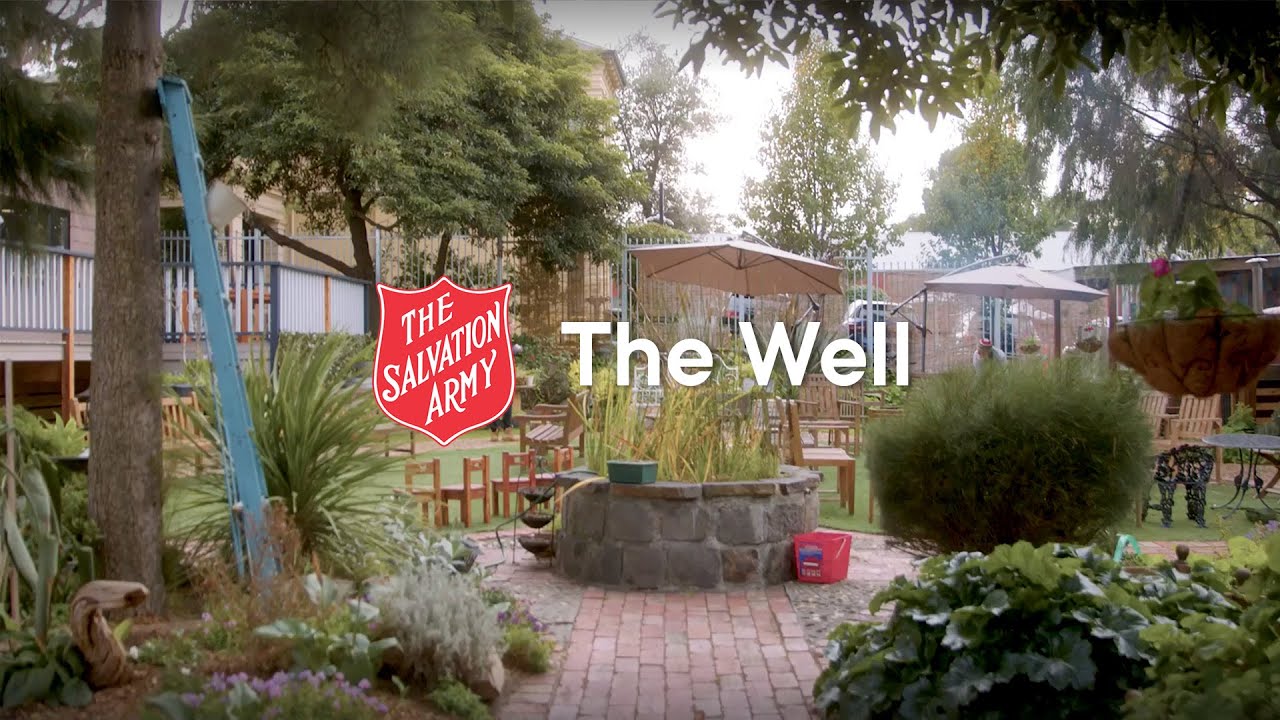
- Salvo Stories: The Well - A welcoming community garden in St Kilda, Melbourne
Located off a busy road in St Kilda, The Well is a safe space that engages with people who are lonely and searching. There’s a community garden that offers a quiet haven for contemplation, a chapel for restoration of the soul, and the Well team who are always available for a cup of coffee, a chat or a warm meal.
- Store and corps unite to connect with community in Sydney’s west
BY FOUZIA MUBARIK AND LAUREN MARTIN Shoppers at Seven Hills Salvos Store in Sydney’s west were able to engage with local Salvation Army services and faith expressions at a recent Community Connect event. Salvos Stores and Blacktown City Corps partnered to create the event, designed to engage with people struggling with the cost-of-living crisis and those experiencing loneliness and isolation. Volunteers set up stations offering free food, beverages and tattoos for kids. Personnel were available to talk to people about how Blacktown City Corps helps the community. Corps Officer Captain Fouzia Mubarik said she and her team gave people information about Moneycare, the free grocery service they run and Salvos Connect: “For many attendees, this was an invaluable opportunity to address pressing concerns and take steps toward improving their overall wellbeing.” “It’s vital to create spaces where people from different backgrounds can come together, fellowship, and share about life,” Fouzia said. “Then we can talk about how we can help them with our programs.” The success of the Community Connect Event was made possible through the collaborative efforts of Salvos Store Manager Rizwana Khausar, and Fouzia along with the support of Salvation Army soldiers and volunteers. Nuria Gonsalves from the Intercultural and Disability Inclusion Team was also involved in the planning of the event. “It served as a reminder that our communities are stronger when we connect, support and uplift one another,” said Fouzia, citing 1 Peter 4:9-10, which says, “Offer hospitality to one another without grumbling. Each of you should use whatever gift you have received to serve others, as faithful stewards of God’s grace in its various forms.” She says it won’t be the last time the corps and store work together to connect with and serve the local community.
- The Third Place opens doors to those on the street in Perth
BY ANTHONY CASTLE With Western Australia facing its worst-ever housing shortage, the City of Subiaco and The Salvation Army have come together to offer somewhere for those with nowhere to go. The result is a weekly walk-in centre offering refuge and assistance to individuals facing or at risk of homelessness. This initiative, set to span a whole year, commenced last week at The Third Place on Barker Road, where the doors will be open every Wednesday from 10am-2pm. Those needing assistance will be able to access food, water, clothing, sleeping bags, as well as referrals to additional services. The Salvos’ specialised homelessness response can also help build towards more long-term solutions for clients. The initiative is the result of research and case studies from Salvos working directly with those experiencing homelessness in the area. Salvation Army Homelessness Services State Manager Major Ken Smith said the data and case studies gathered showed the need for a specialised homelessness response in Subiaco. “The trial had a significant impact on supporting vulnerable community members living in Subiaco, even within a short trial period,” he said. Subiaco Mayor David McMullen said the centre would provide a coordinated response to homelessness to help some of the community’s most vulnerable. “It offers the complex care required to make a meaningful difference to the lives of people at risk of or experiencing homelessness in the community,” he said. The Salvation Army in Western Australia continues its commitment to aiding the homeless with a 24/7 referral line (0429 511 833) and a general evening outreach service spanning multiple local government areas. The walk-in centre at The Third Place on 325 Barker Road opens its door to those on the streets at a time when there have never been fewer homes for those who need them. Some information courtesy of The West Australian newspaper
- Book Review: Mission is the Shape of Water by Michael Frost
REVIEWED BY MAJOR PHIL INGLIS In the 1970s, my parents left Australia and backpacked their way to London. After a short time working at the International Headquarters of The Salvation Army (washing the General’s car), they flew to Zambia in central Africa. They were two of the dozens of Salvation Army personnel from North America, Australasia and Europe to serve at Chikankata Mission. My sister and I were born in the Mission Hospital, and my parents later returned to Australia. I have heard stories of missions my whole life and spent many nights with officers and lay people talking about mission (and sometimes mischief), as they often gathered whenever one or another of the crew came to visit Sydney. Later, in my teens, I joined the staff at Red Shield Summer Camps. We welcomed kids to camp and spent a week giving them great food, great fun and great experiences around Sydney. Basically, we did everything we could to make the kids understand that they are valued, they matter, they are important, and they are loved. This was mission, and I loved it. One time, I was telling this to one of my parents’ old Chikankata friends, and they simply said, “Why don’t you become an officer?” Well, that was that, and I’ve been ministering as a Salvation Army officer now for 22 years. Sadly, I soon discovered that ministry as a Salvation Army officer wasn’t all about taking kids to the beach, cinemas, the zoo and Sydney Harbour. As I was trying to wrap my head around full-time ministry, one of the extremely helpful books I read was The Shape of Things to Come by Mike Frost and Allan Hirsch. This book both encouraged and inspired me to see mission in a broader sense and helped me understand my mission as a Salvation Army officer. When I was given the opportunity to read Mike Frost’s latest book on mission, Mission is the Shape of Water, I jumped at the chance. In this book, Frost shows how, throughout history, mission has changed its shape to fit the cultural container within which it is poured. The shape of mission – as practised by my Salvation Army officer grandparents in 1950s Australia – was vastly different to the shape of mission in a hospital and high school in 1970s Zambia. The shape of mission at camps and churches today is vastly different again. To illustrate this idea further, Frost spends 10 chapters exploring different shapes adopted by major mission movements in history. From the ‘god-slaying’ missions of the early centuries to the ‘unearthing’ missions happening today. Whether or not you are professionally engaged in mission or ministry, this book is for you. It is an absolute joy to read. I was enthralled by the stories, appalled by some, encouraged by others and inspired by all. The best part of this book is the epilogue ‘Where Will the Water Flow?’. Here, Frost takes all that has been learned in the previous 10 chapters and extrapolates it in a few ways to give us some insights into the future of mission in our post-Christendom, post-enlightenment, post-COVID world. Perhaps the most encouraging point is that no matter what shape the future takes, mission, ministry and the active spirit of God will always flow and fill that shape to bring about the purposes of God. Mike Frost’s Mission is the Shape of Water is available from amazon.com.au
- • Merri-bek re-imagining
Merri-bek Corps in inner-northern Melbourne “took the next step in re-imagining ministry” as they gathered as one church yesterday at the Brunswick site that has been serving the community for 139 years. Major Rebecca Inglis, Area Officer, affirmed the new corps officer team in their appointments – Lieutenant Steph Glover, Lieutenant Alison Templar and Captain Meg Dale. During the meeting, Meg and Alison shared their inspiring journey to faith in Jesus. “We also learnt what it looks like to join together in unity as diverse parts of the body of Christ, each using our God-given gifts and skills to do God’s work,” said Steph, who also serves as officer team leader. Following the service, the congregation shared a barbecue lunch in the middle of the surrounding neighbourhood to get to know each other better.
- Tribute for Captain Gwen Gray
To read Gwen’s tribute, click here
- Almost apologising
As part of my usual working week, I attend several planning meetings, including one with staff at my corps – a wonderful team I’m very grateful for. Recently, we were due to start a 12-noon meeting when, at one minute to 12, one staff member entered in a rush and said to the rest of the team, “Sorry, I’m late.” I replied, “You’re not.” To which she said, “Well, almost. Sorry.” As she took her seat, I tried to wrap my head around the concept of apologising for being ‘almost’ late for a meeting. If you’re not late – even if you’re ‘almost’ late – then you’re either on time or early. So why was she apologising for being early to a meeting? Imagine someone passing a cup of tea to you and the tea gets a bit ‘wavy’ in the cup, but they don’t spill a drop, and as they pass it to you, they say, “Oh, I’m sorry, I almost spilled it then.” What are they apologising for? Apologising for things that almost happen but don’t is a curious thing. I’m kept busy apologising for the things I’ve done wrong without also apologising for the things I got right! Speaking of things I’ve done wrong. I recall a time at a previous corps appointment when a young man who attended the corps came to me after one Sunday meeting and asked if I’d pray for him on Tuesday at 10am because he had a job interview for a casual job. I asked some questions about the position, wished him all the best, and assured him of my prayers. Next Sunday, after the meeting, he again approached me, and I had a sudden glimmer of a thought that I was supposed to have done something for him. He smiled broadly and said, “I got the job!”. I said that was wonderful, and he replied, “Thank you for your prayer. It must have worked!”. Now, two things here: first, I forgot to pray for him. It never happened. Second, he was a young man still finding his way into faith and learning about the value of prayer. He was standing in front of me, believing that perhaps, just maybe, this prayer thing seemed to actually work. Maybe there really was a God who listened to us. Should I have apologised to him for my oversight? I decided I’d deliberately vague it up. I said, “Well, God knows what’s best. He must have wanted you to get that job.” This seemed to satisfy him, and he went away with a smile on his face and a fervent belief in prayer. In my defence, I never lied to him. He had the job. He believed in prayer. All was good. Well, goodish. It seemed to me that even though I should have been apologising to him, it was more important that he learnt a valuable lesson about prayer. Despite the lack of a, well, an actual, you know ... prayer. As it says in Romans 8:26–27, the Spirit intercedes for us in accordance with the will of God. So I’m of the belief that the Spirit prayed for him because I forgot. At least I ‘almost’ prayed. Surely that counts for something. – Major Mal Davies and his wife Major Tracey are the Corps Officers at Adelaide City Salvos
- Nothing About Us Without Us
Today is the International Day of Prayer for Victims of Human Trafficking. In this video, The Salvation Army Survivor Advisory Council discusses the importance of voicing the lived experiences of those impacted by modern slavery. It is the hope of the council that by reclaiming this space, many will be empowered to tell their stories and experience healing.
- Brisbane sleepout raises $33,000 for women’s homelessness services
BY CLIFF WORTHING The Salvation Army Brisbane City Women’s Homelessness Services was the beneficiary of funds raised by the Brisbane Sleepout on 8 September at the RNA Showgrounds. About 70 people participated in the event, raising more than $33,000 for women’s services, which provide supported accommodation for 35 women at a time and a mobile support service focused on early intervention and prevention of homelessness for women. “It was a good night. Everyone was in a reflective space and shared their own stories and experiences,” said Amelia Nixon, Community Development Worker at Brisbane City Women’s Homelessness Services. “It was great to build relationships with lots of like-minded people with a shared purpose.” Program Manager Jocelyn Harrison provided an overview of the service and encouraged participants to recognise the importance of listening to and reflecting on the experiences of women who had experienced homelessness. She asked everyone to reflect on the question, “What does home mean to you?” to set the tone for the evening and build shared understanding for attendees. A panel discussion that included two women with lived experience of homelessness enhanced participants’ understanding of the issues faced by women. Emma and Betty explained their challenges of escaping domestic violence, interactions with the Department of Child Safety and being priced out of the rental market. “Emma and Betty really connected with the audience and appreciated being able to tell their story,” Amelia said. “We really appreciated Emma and Betty coming along. Connecting with the community this way is so important in reducing stigma and helps develop the community’s understanding of homelessness and how to support people.” Funds raised will help the women’s service support early interventions such as assisting with rental arrears, sustaining a current tenancy, furniture or relocation costs for new tenancies and addressing other barriers to keeping their children in the home and the family being able to stay where they are. “We are all in this together,” Amelia said. “We can respond as a community to address this growing issue, listening and valuing the contributions of those who have experienced this firsthand, alongside the work of government and social services in this space.” “I was really moved by the outpouring of support for homelessness in the community, and even though I was nervous to speak, I am so glad I did it,” Emma said. “Thanks everyone for showing up and showing your support.” Brisbane Sleepout slideshow of photos: Photo 1: Participants discuss some of the issues facing women at risk of homelessness. Photo 2: Milly (Community Development Worker), Betty and Emma provide insights as part of the panel. Photo 3: The full panel share their insights with attendees. (From left) facilitator Jess from media company Olive Louise Social, Community Development Worker Milly, Betty, and Emma (women with lived experience). Photo 4: Attendees line up for dinner at the SAES van. Photo 5: (From left) Sean Aston, Lisa Kroon, Paul Campbell, Heather Olm and Bronwyn Rule from Brisbane Streetlevel Mission provide much-needed coffee and chocolate for attendees.
- Red Dust partnership making a positive impact in the Red Centre
BY CHLOE RICE Partnerships play a vital role in living out The Salvation Army’s mission of transforming lives and restoring communities. One such partnership is the collaboration between The Salvation Army and Red Dust, a community organisation, implementing intergenerational Alcohol and Other Drugs (AOD) programs for men aged 18 and above on Arrernte lands in Alice Springs. For a decade, The Salvation Army ran an Indigenous AOD recovery program out of Alice Springs. With challenges such as unmet targets, staffing issues and program revisions, it was evident that a change was needed. In 2019, territorial leadership acknowledged the significance of having Indigenous leadership running the program, prompting Tam Tran, The Salvation Army’s National AOD Specialist, to approach Red Dust. Red Dust soon became the delivery partner of the program, and The Salvation Army maintained the government contract, meeting accreditation and governance requirements. Six months into the partnership, the program was exceeding its goals. Between July 2021 and June 2022, the program saw approximately 200 yarning circles being facilitated, 146 brief interventions provided, 15 suicide prevention actions and 18 referrals to other services. Kathryn Wright, General Manager for AOD, says that the cultural knowledge and leadership Red Dust brought to the delivery of the program – through outreach activities, cultural trips and yarning circles – was critical to its success. “For Aboriginal and Torres Strait Islander communities, connection to culture and Country has a direct link to a significant reduction in alcohol and other drug-related harm. Of course, it makes sense, as a connection to Country increases First Nations people’s sense of self and belonging,” Kathryn explains. The program takes a trauma-informed approach, acknowledging the impact of personal and intergenerational trauma on people and their journey to recovery. This critical approach establishes a sense of safety and trust through the various activities Red Dust runs throughout the year. Some of these include: • Camps and day programs that focus on providing knowledge and skills to inform healthy decision-making around topics such as the misuse of drugs and family violence. • Yarning circles that are aimed at connecting as individuals and groups. • Discussions around what it’s like living in the ‘intergenerational gap.’ • Discussions around living in a ‘white man’s’ world while maintaining their culture. • Vocational activities, practical life and work skills such as Bush mechanics, fencing and cement work, and artifact/traditional tool making. There is also a focus on Elders passing on their knowledge to younger men, conversing through several generations. Specifically, the ‘Elders’ group’ has helped clients obtain better access to traditional knowledge and perspectives, reconnecting a sense of identity to places of history and belonging. Between 2021 and 2022, 39 new clients engaged with this group through the partnership with the Salvos. Exploring spirituality is another key element to the delivery of the program, which has led to a deeper sense of culture, identity and faith. This results in a strengthening of first-hand participants, their families and communities. The ‘Train the Trainer’ initiative is another example of the support Red Dust is able to equip previous program participants with the necessary skills to become trainers themselves. By passing their knowledge and passion, participants become living proof of the program’s sustainability and potential for long-term change. Throughout 2021-22, Red Dust employed four Alice Springs-based Aboriginal men and four Elders as coordinators, drivers, cultural guides and facilitators. Red Dust’s ability to connect to these communities is reflected in the growing number of participants joining the activities. These connection points help provide a stronger sense of self, cultural safety and alliance to community members, something the Salvos haven’t been able to do previously but are working on through such partnerships. But the partnership is twofold. From Red Dust’s perspective, collaborating with the Salvos meant they could gain their own accreditation, which took 8-9 months. Fred Docking, The Salvation Army’s Service Manager and Northern Territory Coordinator, shares, “The Salvation Army assisted Red Dust in getting accredited, enabling them to secure funding and achieve new heights. “Capacity-building has allowed Red Dust to grow independently while the partnership continues to provide employment opportunities, lifting people out of poverty and making a positive impact on individuals, families and communities.” Tam Tran added, “We’ve given them the resources and template, they did the work and are now going beyond that and delivering more support for more communities.” Although there is still much work to be done in this space, Fred explains that there are four pillars of recovery – safety, hope, health and community. Addressing these in a culturally safe environment is the key to delivering true transformation in any community. For more information on Red Dust, go to the website here
- Dementia Action Week – Holistic approach to aged care
Dementia Action Week (18-24 September 2023) is drawing to a close. The theme, ‘Act Now for a Dementia-Friendly Future’ is one that The Salvation Army Aged Care (TSAAC) takes seriously across all its 21 residential aged care centres. Salvos Online writer SIMONE WORTHING recently spoke to Margaret Williams, Manager – Clinical Procedures and Practice Excellence for TSAAC, about her work, with a focus on caring for those experiencing dementia, and their families. Salvos Online: How did you become involved in working for The Salvation Army’s Aged Care centres? Margaret Williams: I grew up in Sydney and moved to the Kimberley in WA, working in a remote Aboriginal community with the intention of returning home in one to two years. I worked in the Kimberley and Darwin, and 17 years later, I returned to Sydney. I was looking for jobs and saw one advertised with The Salvation Army Aged Care. My career had been varied over the years, but the last time I had worked in Aged Care was at Macquarie Lodge, one of the Salvos Aged Care centres, when I was at university. I’m the Manager of Clinical Procedures and Practice Excellence for The Salvation Army Aged Care centres around Australia. One of the challenges is that the Salvos have 21 aged care centres in seven states and territories. I write the policy documents that need to meet the differing requirements in each state. My role also involves assistance with incident investigation, education, compliance and accreditation. I’m a registered nurse by profession. It was an interesting time to come into aged care, particularly with policy and accreditation. When I started it was in the middle of the pandemic and there were different regulations in every state. It was also not long after the Royal Commission into Aged Care, so there were new standards and requirements for all providers, and it was interesting to navigate all that. Is most of your work done behind the scenes or in the centres? I write policies, send them out to the centres and talk to centre and care managers to make sure that the care we’re providing is best practice but also person-centred and works for the consumers and for the staff. I also work with our teams in Salvos Home Care and our retirement villages. In working with those with dementia, is there anything that delineates The Salvation Army from other aged care providers? A lot of our centres have designated dementia units and provide education to our staff. It’s a challenging space, and the dementia journey is different for every person and their families, so you can’t have a one-size-fits-all approach. It’s about looking at individualising our care and services for the person, which can be challenging. But our staff are trained to identify people’s needs and understand their behaviours and what might help each individual. Do you have chaplains or ministers who are able to look at the spiritual side of aged care? Yes. We’re very big on making sure our care is holistic, and we have a chaplain at each centre. The chaplain conducts a spiritual assessment with every person so we can find out what has been important to them. If it’s a particular religion, for instance, we ask what parts of that religion are important to them. We also have lifestyle staff at all our centres, and residents do a whole range of activities during the day – anything from movies to karaoke to cooking classes and gardening groups. What are some of the stereotypes and myths around aged care that it would be good to have busted? I think the environment around aged care is a bit of a myth. A lot of people see it as hospital wards where people are just sitting in rooms, whereas in most of our centres, the environment is beautiful. We have outdoor areas with sensory gardens and beautiful views, and lots of sitting rooms and activity rooms. Another of the myths in aged care is around food. You always hear, much like you do with hospitals, that the food is terrible. But we have chefs on-site at all our centres and put a big focus on what we call the dining experience. Is there anything you would like to add about the ageing journey? People are living much longer and from an aged care perspective, we really understand that now. Just because somebody’s older doesn’t mean they shouldn’t have choice, and that they shouldn’t have a say in their care and their life. Lots of families feel guilty about putting people into aged care or they’re worried about whether they’re going to be able to be involved in their care. It’s really important for significant people in the person’s life to be involved in their journey as well, so they can maintain those relationships. What are some of the personal joys in your job? I love it! Members of the team in head office are great to work with – everybody’s very collaborative, and our passion is to ensure that we do aged care well. We’re all on the same page, and it’s evident that we don’t want to just be good at things, we want to always do better. Our centres are full of beautiful, committed people who really enjoy their jobs and care about those they look after. Does The Salvation Army have plans to develop aged care? We are always working on improvements. It’s definitely a growing area, and there’s absolutely a growing need throughout all levels of society. Lots of our centres have waiting lists, and it’s certainly an area that people sometimes struggle to get into. We want to ensure that there is equitable access for everyone. All people deserve to be cared for well as they age. It’s going to be a challenge in the future, but The Salvation Army is absolutely committed to trying to ensure we meet the need. ‘Striving for the best life possible’ – To read an interview with Colleen Fitz-Gerald (Clinical Learning Specialist at The Salvation Army Aged Care, pictured below) click here
- Dementia Action Week – Striving for the best life possible
As part of Dementia Action Week this week, 18-24 September 2023, Salvos Online writer SIMONE WORTHING spoke to Colleen Fitz-Gerald about her role with the Salvos and her passion for people living with dementia. Salvos Online: What is your role in The Salvation Army’s aged care program? Colleen Fitz-Gerald: I’m the Clinical Learning Specialist – manager of education across residential, home care and retirement villages of The Salvation Army. Initially, my job was meant to be clinical education because I’m a registered nurse, but it now encompasses other things like manual handling, codes of conduct and new staff orientation. I develop all different kinds of resources and competencies in medication, wound management, hand hygiene and PPE. I’m based in Sydney and travel around the country to residential centres and home care hubs to train staff. The people in home care are clients, and those in residential centres are residents, and I work with both cohorts. What motivates you to work in aged care? I’ve been working in aged care for about 25 years. I love being part of people’s final journey and making that as good as it can be. My underlying passion is for people living with dementia, and I love working with them and giving them the best life they can have. I enjoy teaching staff that the very best way you can care for any person is by being person-centred – really getting to know them. The other important concept that I teach the staff is to make that person’s own reality okay for them. For a person with dementia, it’s very real that they think it’s 40 years ago and they need to pick the kids up from school. So, I advise the staff to forget actual reality and to meet the person where they’re at. I teach carers different things to say to distract the person and get them talking about their memories. What are the main causes of dementia? There are so many different causes of dementia, and it’s such an umbrella term, but it’s very closely connected to lifestyle and diet – hereditary dementia is on the lower end of the causes and more rare compared to other forms of dementia. We’re seeing a lot more alcohol-related dementia and dementia caused by sporting injuries. And because our lifestyles have changed for the worse over recent decades and, in my opinion, we’re going to see a lot more of this. Dementia is the second leading cause of death in Australia after coronary heart disease and the leading cause of death for women. How important is lifestyle? I think lifestyle has the biggest impact. We can’t change our genetics, but we can change our lifestyle. At a recent conference I attended, a man with Alzheimer’s disease spoke to the audience about his lifestyle and the changes he implemented, tracking everything he was doing. It was interesting to hear his observations about his lifestyle and how changes he was making improved it. How can people in the community become more understanding and respectful of those living with dementia? Acceptance is absolutely key, as is knowledge. We need to be better informed about the disease and the ways we can help people living with dementia. South Australia has just opened a dementia village similar to one in Norway where the whole community is dementia friendly. Supermarkets have been set up to help someone who’s struggling with money. Tasmania is starting a similar project as well. It’s my dream to have something like that someday, where people with dementia can be happy because the disease doesn’t totally impact their lives. ‘Holistic approach to aged care’. To read an interview with Margaret Williams (Manager – Clinical Procedures and Practice Excellence for The Salvation Army Aged Care, pictured below) click here